


Germany's Smart Meter Rollout Is the Biggest Real-World LwM2M Deployment You've Never Heard Of
While the IoT industry talks about scale, Germany quietly delivered it
By:
OMA
|
2026-March-10
People in the LwM2M world talk a lot about scale. Proof of scale is harder to find. Germany just handed you one and it involves a utility operator, a device management platform, and a national energy programme you have probably never seen discussed at an IoT conference.
AVSystem announced in February 2026 that Heinz Lackmann GmbH & Co. KG has selected Coiote, AVSystem's IoT device management platform, to manage its Smart Meter Gateway estate across Germany (see the announcement here).
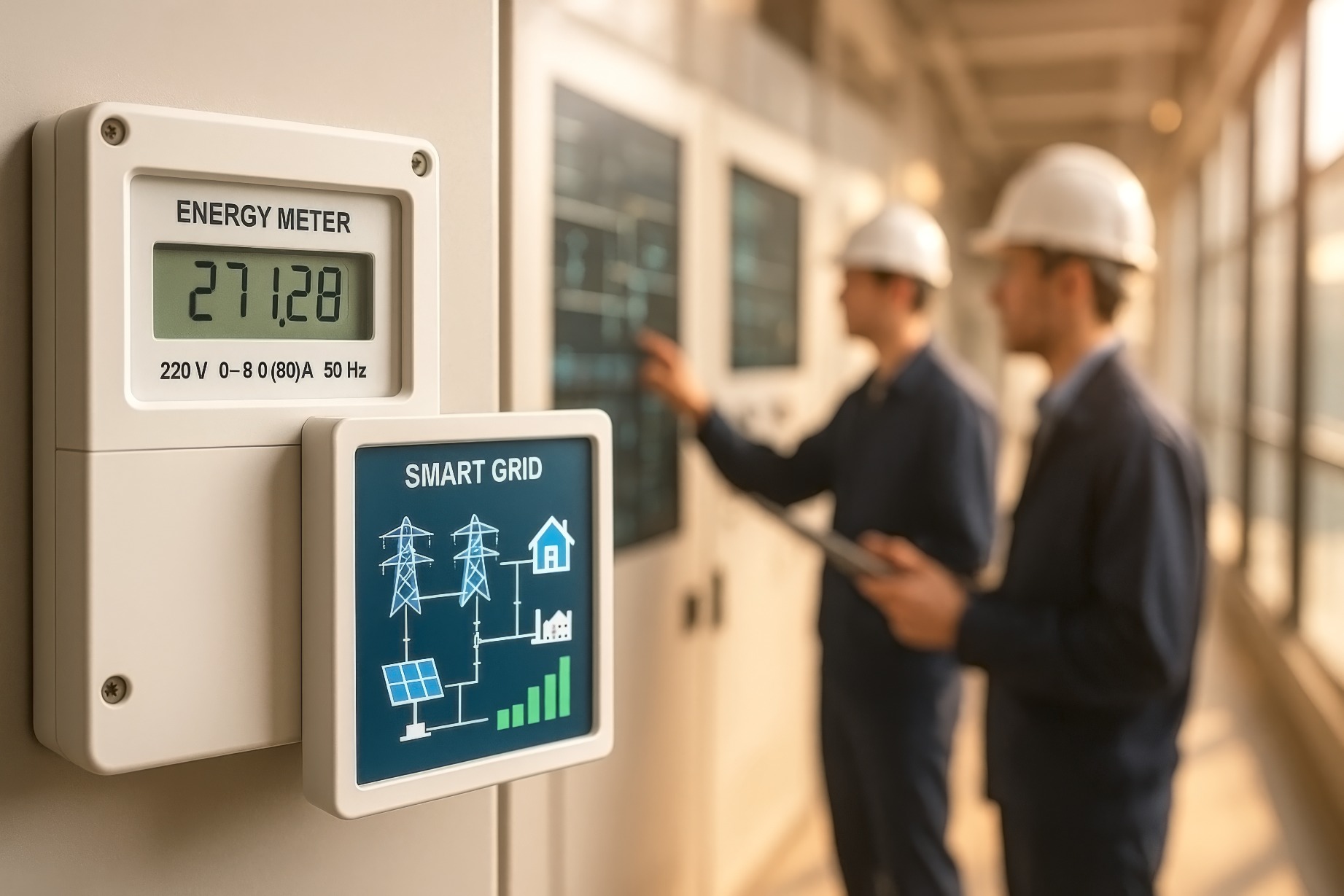
Heinz Lackmann is a Messstellenbetreiber, a metering point operator responsible for deploying and operating Smart Meter Gateways under Germany's iMSys framework. Coiote is built on Lightweight Machine-to-Machine (LwM2M)1. That makes this a named, production, national-scale LwM2M deployment in a regulated energy market. Not a proof of concept. Not a pilot. Production.
Germany's iMSys programme, intelligentes Messsystem, mandates the rollout of certified Smart Meter Gateways to homes and businesses across the country. The technical specification for SMGW management is defined in BSI TR-031092, and that specification requires standardised device management at scale. LwM2M is the protocol that satisfies it.
Monitoring is not management — and the difference is expensive
There is a phrase buried in the AVSystem announcement that matters: the transition from "a monitoring model to a proactive framework."
That distinction sounds like marketing language. It is not. It describes a real operational gap that anyone running large device estates eventually hits.
Monitoring tells you something went wrong after it happened. Your dashboard shows a connection drop. Your signal metric dips below threshold. You log the event and open a ticket. The device has already been offline for however long it takes your team to notice, triage, and respond. In a small fleet that might be tolerable. At the scale of a national smart meter rollout tens of thousands of gateways managing energy data for homes and businesses, it is not.
Proactive management means the platform flags degradation before the connection fails. It means you can see signal quality trending downward across a cluster of devices in a specific area and act on it before service drops, before you miss a regulatory reporting window, before your utility customer calls. The difference is not a UX preference. At mass scale, it is the difference between meeting your service-level obligations and breaching them.
LwM2M is what makes proactive management technically possible at this scale. The protocol's observe/notify mechanism lets a server subscribe to device metrics and receive updates when values change without polling every device constantly. When you have 50,000 gateways, you cannot poll your way to real-time visibility. You need a protocol designed for constrained devices at scale. LwM2M is that protocol. Coiote, built on it, is what Heinz Lackmann now runs.
Germany is proving what LwM2M looks like in the real world
Standards documents describe what a protocol is supposed to do. Deployments like this one prove whether it actually does it.
Germany's iMSys rollout is not a niche programme. It is a federal mandate covering the digitisation of energy metering infrastructure across one of Europe's largest economies. Every Messstellenbetreiber in Germany faces the same operational challenge Heinz Lackmann is solving: managing a growing SMGW estate with high availability requirements, regulatory compliance obligations, and utility service-level agreements that leave no tolerance for downtime caused by poor device visibility.
AVSystem's Coiote platform being selected for this role is not just a commercial win for one vendor. It is a validation event for LwM2M. The BSI TR-03109 specification exists. Certified hardware exists. The regulatory pressure to deploy and operate at scale exists. And now, a named operator has chosen a named LwM2M platform to do exactly what the standard promises.
That matters for anyone evaluating LwM2M for their own deployment. The "does it work in production" question now has a concrete answer: yes, in Germany, at national scale, in a regulated energy market, with a metering point operator whose job depends on it working.
Every country mandating smart meters is creating a mandatory LwM2M market
Germany is not alone. The EU Energy Efficiency Directive requires member states to accelerate smart meter rollouts. France, Spain, and Italy are all running national programmes. Outside Europe, smart meter mandates are active in the UK, Australia, and parts of Asia. Every one of those programmes creates a device management requirement. And every device management requirement at this scale is a case for a standardised, lightweight, secure protocol.
That is not an argument about protocol preference. It is arithmetic. You cannot manage hundreds of thousands of metering devices individually. You need a standard interface. The German framework settled on LwM2M because it is the protocol that works on constrained hardware, supports secure communications over DTLS, and defines the object models you need for firmware updates, diagnostics, and configuration without requiring a proprietary stack on every gateway.
Platform vendors without LwM2M expertise are excluded from these markets. Not by choice by specification. If your device management platform does not implement LwM2M correctly, it does not qualify for deployment in Germany's iMSys programme. The same is becoming true in other markets as regulators follow the German model.
For device manufacturers, this is a hard constraint, not a soft preference. Build native LwM2M support into your hardware and firmware, or plan to be absent from the largest category of regulated IoT deployment in Europe over the next decade.
The reference case everyone should be citing
The LwM2M market is projected to grow from $2.5 billion in 2026 to $6.9 billion by 2033, according to Market Research Intellect with smart utilities identified as the lead application segment. That projection has a real-world anchor now. The Heinz Lackmann deployment is the kind of named, production reference that moves LwM2M from "promising standard" to "proven infrastructure" in procurement conversations.
If you are building IoT devices that will operate in regulated metering environments, the question is not whether your platform should support LwM2M. It already needs to. The question is whether your implementation is correct enough to pass the BSI TR-03109 compliance tests and whether it interoperates cleanly with the platforms your customers are already running.
That is exactly what OMA TestFest3 is designed to test. Put your LwM2M implementation in a room with server implementations from other vendors. Run the interoperability test cases. Find out where your observe/notify behaviour diverges, where your firmware update state machine breaks, where your bootstrap sequence stalls. Fix those gaps before a Heinz Lackmann or its equivalent discovers them in production.
Germany's iMSys rollout is the proof-of-concept for what national-scale LwM2M deployment looks like. The next one is already starting somewhere else. If your implementation is not validated, you are not in the running.
Footnotes
- Lightweight Machine-to-Machine (LwM2M) is an open standard for remote device management and service enablement in IoT, developed by the Open Mobile Alliance (OMA). ↩
- BSI TR-03109 is the German technical guideline defining security and management requirements for Smart Meter Gateways within the intelligent metering system (iMSys) regulatory framework. ↩
- TestFest is the interoperability testing event organized by the Open Mobile Alliance (OMA), where vendors test LwM2M implementations for interoperability and specification compliance. ↩